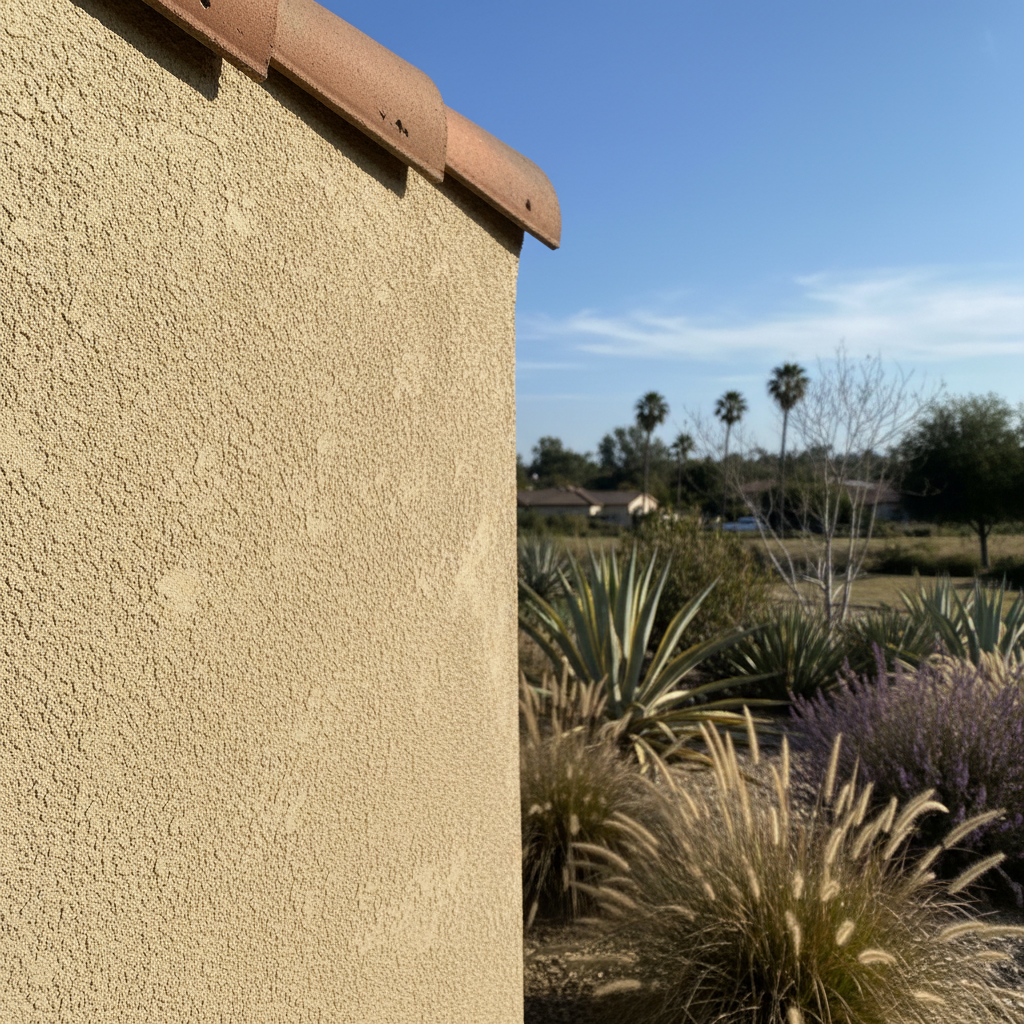
Many homeowners in Santa Ana do not look closely at their exterior walls until a piece falls off or water leaks inside. Stucco inspections around Santa Ana are very important because the dry heat and occasional heavy downpours put exterior walls through a lot, especially if you live closer to historic areas like Floral Park where older homes have seen decades of weather.
Before you even touch a ladder, you need to know what you are looking for. Stucco is tough, but Stucco cracks. Not every Stucco crack means your house is falling down, but ignoring Stucco cracks is a gamble you will probably lose.
Before You Start: Getting Your Eyes Ready
Grab a notebook and a garden hose. You do not need fancy contractor gear for a basic Stucco walkaround. Look at the base of your walls where the Stucco meets the concrete foundation. If sprinklers hit the Stucco wall every single day, that is where trouble starts first.
Walk the perimeter of your property. Look for Stucco hairline cracks. If the cracks are thinner than a credit card, you can usually handle those Stucco repairs yourself with some elastomeric patch. But if you can stick a nickel in the Stucco crack, put the DIY tools down.
During the Walkaround: What to Check
Start high and work your way down. Check around window frames and door corners because those are stress points where movement happens. Here is a quick checklist of what to watch for:
- Stucco hairline cracks under window sills
- Staining or rust streaks running down from metal weep screeds
- Dull, powdery spots where the Stucco color coat is failing
- Bulging or soft Stucco areas that feel hollow when you tap them gently with your knuckle
That hollow sound is a key red flag. It usually means the Stucco has delaminated from the lath behind it. Moisture got in somewhere, rusted the wire mesh, and now the outer Stucco shell is floating.
After the Inspection: DIY vs. Calling a Pro
Once you have circled the house, you will know what you are dealing with. If you found a few minor Stucco hairline cracks and some fading Stucco texture, that is normal maintenance. Clean the Stucco area, let it dry completely, and seal it up. The repair process is straightforward.
If you found rust stains, crumbling Stucco corners, or large bulging Stucco sections, it is time to bring in backup. Valley Stucco sees homeowners try to patch big water-damaged Stucco areas with hardware store buckets, only to trap more moisture inside. Real Stucco Repair means cutting out the bad Stucco section, checking the paper and lath behind it, and tying the new Stucco coat into the old mesh properly.
Take an hour this weekend to walk your Stucco walls. Catching small Stucco problems now keeps your exterior solid and saves you from a massive Stucco repair bill down the road. For homes and businesses in Santa Ana, Valley Stucco provides Stucco Repair services.